
Why Your Philadelphia Home Feels Clammy Even When the AC Is Running
Ask a homeowner in Fishtown, Glen Mills or Cherry Hill what they dislike about a Philadelphia August and almost nobody says "ninety degrees." They say the air feels thick. That distinction matters more than it sounds, because it explains the single most common summer complaint we hear: the air conditioner is running, the thermostat says 72, and the house still feels clammy.
That is not a temperature problem. It is a moisture problem, and the fix is usually different from what people expect.
Why our summers are a humidity problem first
The number that predicts how sticky a day feels is the dew point, not the relative humidity on your phone. In the Delaware Valley, July and August dew points sit in the upper 60s and often push into the low 70s. Anything above about 65°F reads as muggy to most people; above 70°F it reads as oppressive. Meanwhile, a dew point in the low 50s feels genuinely pleasant even at 80°F.
Indoors, you want relative humidity somewhere around 45–55%. Above roughly 60% you get the familiar symptoms: bedding that never feels dry, a musty smell in the basement, wood floors and doors that swell, and a house that feels warm at a thermostat setting that felt fine in June.
An air conditioner dehumidifies only while it runs
Cooling and drying happen in the same place: the indoor coil. Warm household air passes over a cold coil, moisture condenses on it, and that water drains away. Crucially, the coil has to get cold and stay cold for a while before it starts pulling meaningful moisture out of the air. The first few minutes of any cooling cycle are almost all temperature and almost no drying.
This is why an oversized air conditioner can leave a house feeling worse than a correctly sized one. A unit with too much capacity satisfies the thermostat quickly, shuts off after a short burst, and never runs long enough to do the drying half of its job. You get a cold, damp house instead of a comfortable one - and the equipment wears faster from all that starting and stopping.
Signs worth paying attention to:
- Cycles that last only a few minutes on a genuinely hot afternoon.
- The house hitting its set temperature easily but still feeling sticky.
- Condensation on supply registers, or a persistent basement mildew smell.
- Rooms that are cold near the thermostat and warm two floors up.
What older Philadelphia-area housing adds to the picture
Much of the housing stock here - city row homes, twins in Delaware County, older colonials on the Main Line - was built for radiators, not ductwork. When central air was added later, the ducts went wherever there was room: a closet chase, a dropped ceiling, a former laundry chute. Two consequences show up constantly.
Return air is often undersized. Supply runs get planned carefully; returns get whatever space is left. A system that cannot get enough air back to the equipment moves less air, drains less water, and struggles in every room farthest from the unit.
Vertical layouts stack heat. In a three-story row home, warm air rises all day into the floor where people sleep. A single thermostat on the second floor cannot see that. Balancing dampers, adjusting registers seasonally, or zoning are the real answers here - cranking the thermostat down usually just overcools the middle floor.
Basements deserve their own note. A stone or brick foundation stays cool and damp, and cool surfaces are exactly where humidity condenses. Air conditioning does relatively little down there; a standalone dehumidifier set near 50% usually does more for the whole house, since that damp air migrates upward.
Things worth checking before you call anyone
- Set the thermostat fan to AUTO, not ON. With the fan running continuously, air keeps blowing across a wet coil between cooling cycles and re-evaporates moisture straight back into the house. This one setting is behind a surprising number of "my AC doesn't dehumidify" calls.
- Look at the condensate drain. Algae and sludge block drain lines every summer. Many systems have a float switch that shuts cooling down entirely rather than let a pan overflow - so "it just stopped working" is sometimes a clogged pipe.
- Change the filter, then look at airflow. A loaded filter starves the coil. So do closed registers in unused rooms, which people close in winter and forget by July.
- Clear the outdoor unit. Give it a couple of feet of breathing room and rinse dirt, grass clippings and cottonwood fluff off the fins with a gentle hose.
When the equipment itself is the limitation
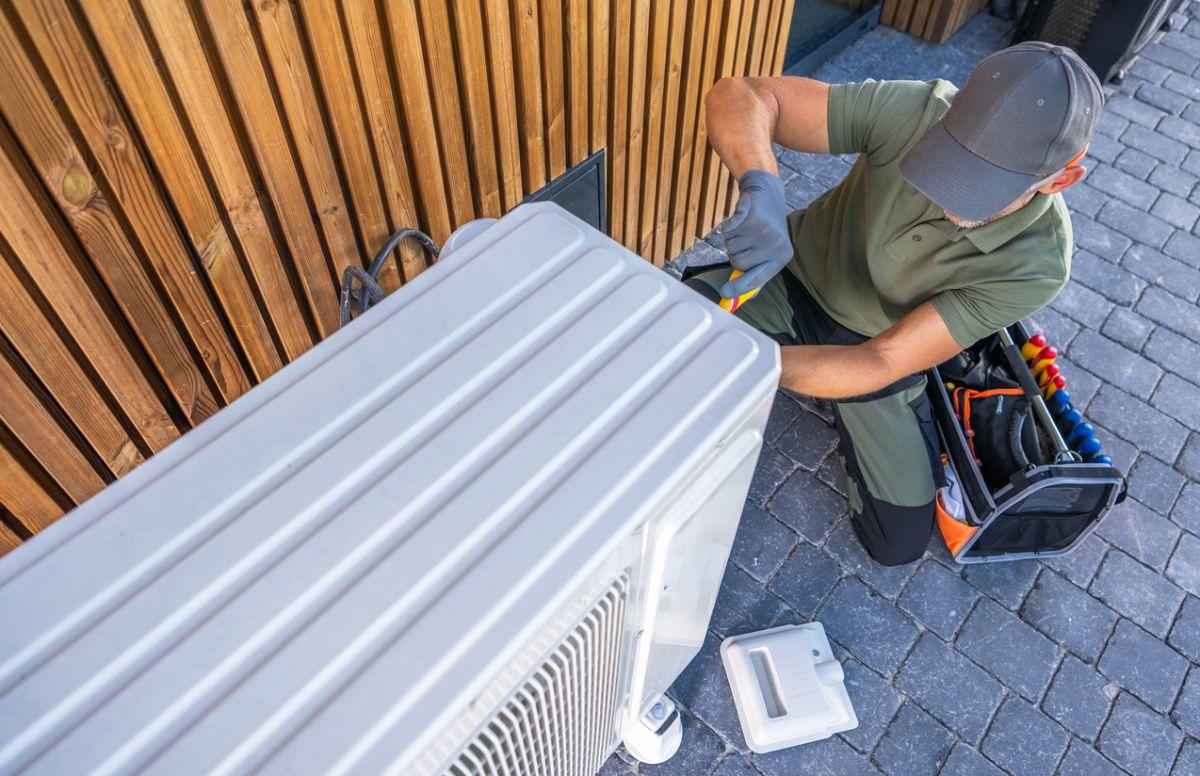
If the basics are covered and the house still feels damp, the constraint is usually capacity control. Single-stage equipment has exactly two settings: full blast and off. Inverter-driven systems - the Daikin equipment we work with regularly falls into this category - modulate down and run long, gentle cycles instead. Longer runtime at lower capacity is precisely what removes moisture, which is why these systems tend to feel better at the same thermostat setting. A whole-house dehumidifier tied into the ductwork is the other route, and sometimes the more sensible one when the existing system is otherwise healthy.
Either way, the honest answer depends on what your house is actually doing - duct layout, return sizing, existing equipment and how your rooms behave on a bad afternoon. That is worth measuring before anyone recommends replacing anything.
If your home has been running cold and still feeling damp this summer, we are happy to take a look and tell you straight what is going on, including when the fix is a small one. Get in touch or call 215-922-9249- we serve homeowners across the Philadelphia area, from Glen Mills and Villanova out through Pennsylvania and New Jersey. You can also see the full range of what we handle on our services page.